
How to Start a Community Garden in Baltimore: A Step by Step Guide
Thinking about turning an empty lot on your block into a place where neighbors grow food together? You are not alone. Baltimore City has more than 800 community managed green spaces, and every one of them started with a few people who decided to try. This guide walks you through how to start a community garden in Baltimore, from finding land and testing soil to getting tools, seeds, and plants into the ground.

Every Baltimore community garden begins with one bed and a few committed neighbors.
Why Start a Community Garden in Baltimore?
In many Baltimore neighborhoods, fresh produce is hard to find close to home and vacant lots sit empty for years. A community garden changes both of those things at once. It puts healthy food within walking distance, gives neighbors a reason to meet, and turns a forgotten piece of land into something the whole block can be proud of.
Community gardens also support mental and physical health. Time outdoors, gentle exercise, and the simple satisfaction of watching something grow all add up. At Planting Words, we have seen how a garden can lift spirits in the same way a kind word can. That is why supplying gardening tools, seeds, and plants to community gardens in low income areas is a core part of our mission.
The good news is that Baltimore has real programs that make starting a garden possible, even if you have never grown anything before. Here is how to get started.
7 Steps to Start a Community Garden in Baltimore
Step 1: Gather a core group of neighbors
A garden lasts when the work is shared. Before you look for land, find three to five people who are ready to commit through a full growing season. Talk with your neighborhood association, your church, a nearby school, or the people who already sit out on their steps each evening. Agree on a few basics together:
- What you want to grow: vegetables, herbs, flowers, or a mix
- Whether beds will be shared or assigned to individual families
- Who will handle watering, communication, and supplies
- How harvests will be shared with the wider neighborhood
Step 2: Find land you can use
Many Baltimore community gardens grow on city owned vacant lots. Through the Baltimore City Department of Housing and Community Development (DHCD) Adopt-A-Lot program, residents, neighborhood groups, nonprofits, schools, and businesses can apply to care for a city owned lot, and adopting a lot is free. Community gardens are one of the uses the program allows. Applications are now handled through the city's BuyIntoBmore website, where you can search for available lots near you.
Other options include privately owned land with written permission from the owner, unused space on church or school grounds, and garden plots that Baltimore City Recreation and Parks offers for rent in city parks. Whatever you choose, get permission in writing before you dig.
Step 3: Think about protecting the garden long term
An Adopt-A-Lot license lets you care for a lot, but it does not make the land yours. If your garden becomes a neighborhood anchor, it is worth planning for its future. Baltimore Green Space, a land trust founded in 2007, works with neighborhoods to preserve community gardens, pocket parks, and other community managed open spaces so they are not lost to development.
Step 4: Test the soil and plan for water
City soil can contain lead and other contaminants left over from old buildings, paint, and traffic. Before you grow food, have your soil tested. Many Baltimore gardens use raised beds filled with clean soil and compost, which keeps roots away from the ground underneath and makes beds easier to tend.
Water is the other must have. Plan where it will come from before planting day. DHCD and the Department of Public Works run a Water Access Program that helps gardeners get water to public or privately owned gardens, sometimes at a reduced rate, although access is not guaranteed for every site. Rain barrels and a simple watering schedule shared among members also go a long way.
Step 5: Gather tools, seeds, and plants
You do not need much to begin, but you do need the basics: shovels, rakes, hand trowels, gloves, hoses or watering cans, wheelbarrows, and good seeds and starter plants. For many neighborhood groups, this is where costs add up fast.
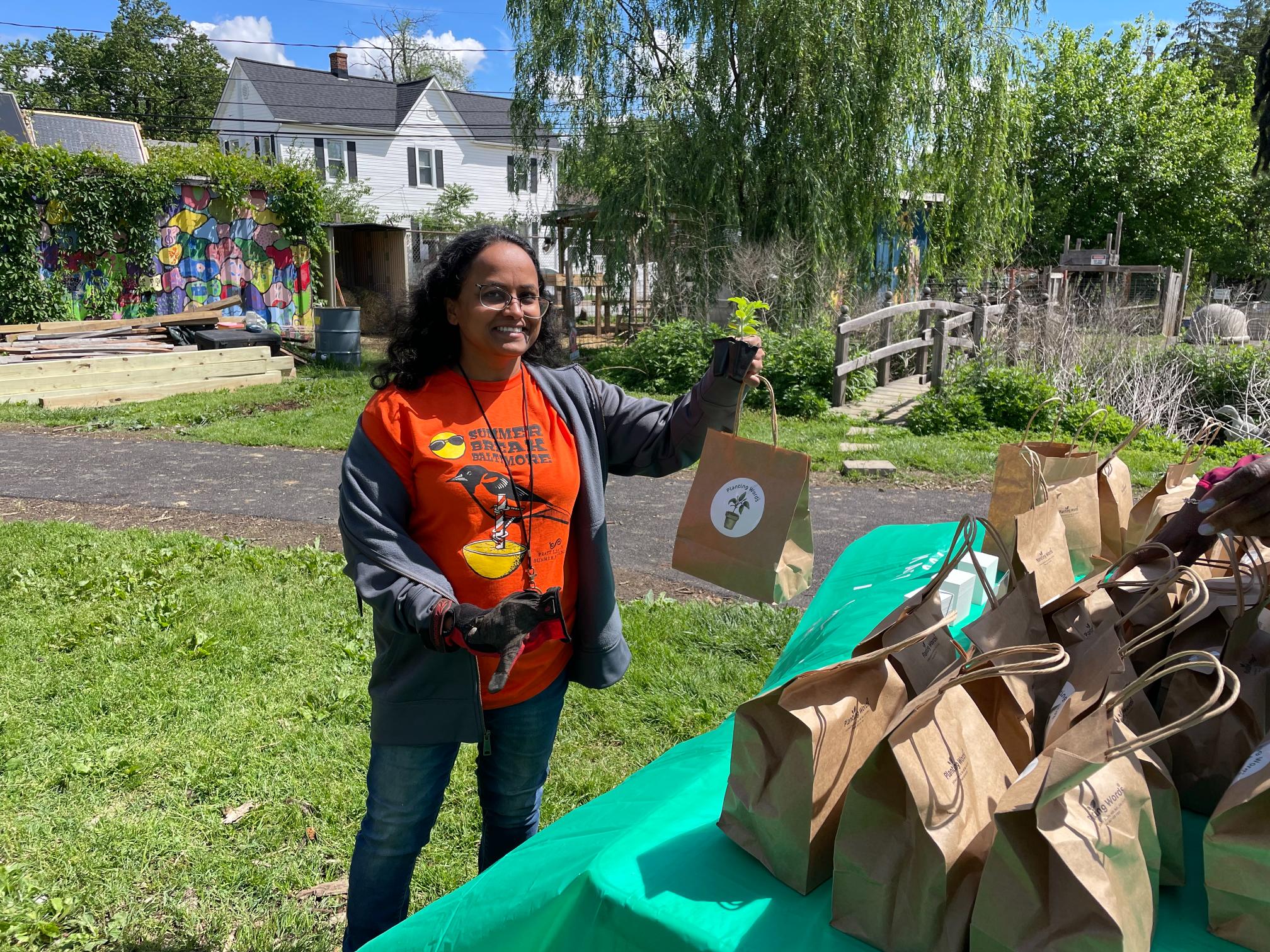
This is exactly where Planting Words helps. We provide gardening tools, seeds, and plants to community gardens in low income areas across Baltimore City, Baltimore County, and surrounding Maryland communities. If your group is starting or growing a garden, reach out to us and tell us about your project. You can read more about our garden work in Community Gardens in Baltimore: How Planting Words Helps Neighborhoods Grow.
Step 6: Plan your planting calendar
Baltimore sits mostly in USDA Hardiness Zone 7b, with some warmer pockets in the heart of the city. The average last spring frost in the city usually falls in early to mid April. A simple plan looks like this:
- Late winter to early spring: plant cool season crops like peas, spinach, lettuce, kale, and onions, which can handle chilly nights.
- After the last frost: move warm season crops like tomatoes, peppers, squash, beans, and basil outdoors. Many Maryland gardeners use Mother's Day weekend as an easy reminder that tender plants are safe to set out.
- Late summer: plant a second round of greens and root crops for a fall harvest.
- Fall: clean up beds, add compost, and plan for next year.
Step 7: Keep the whole community involved
The most successful gardens feel open to everyone. Post a simple sign with a contact name, hold regular workdays, invite kids and seniors, and share extra produce with neighbors who cannot garden themselves. A few written garden rules, agreed on together, prevent most disagreements before they start. Above all, celebrate small wins. A first tomato is worth a party.
Baltimore Resources for New Community Gardens
You do not have to figure this out alone. These local programs and organizations support gardeners across the city.
Adopt-A-Lot Program
Run by Baltimore City DHCD, this free program lets residents and groups care for city owned vacant lots, including as community gardens.
Water Access Program
A DHCD and Department of Public Works partnership that helps eligible gardens get water access, sometimes at a reduced rate.
Baltimore Green Space
A land trust that partners with neighborhoods to protect community gardens and green spaces for the long term.
UME Baltimore City Master Gardeners
University of Maryland Extension volunteers who share science based growing advice through workshops and Ask a Master Gardener tables.
Planting Words
We provide gardening tools, seeds, and plants to community gardens in low income areas, along with plenty of encouragement.
Fall Is the Best Time to Plan a Spring Garden
It might feel strange to start a garden as the weather cools, but fall and winter are the perfect seasons to lay the groundwork. When spring arrives, your group will be ready to plant instead of scrambling.
Your fall and winter checklist
- Recruit your core group and hold a first neighborhood meeting
- Pick a site and learn when the city's next Adopt-A-Lot and water access application windows open
- Get a soil test so you know what you are working with
- Cover future beds with cardboard and leaves to smother weeds over winter
- Make a list of tools, seeds, and plants you will need
- Connect with Planting Words and other local partners for support
How You Can Help Baltimore Gardens Grow
Not ready to start a garden yourself? You can still help one thrive. Every gift and every hour helps us put tools, seeds, plants, and words of encouragement into the hands of Baltimore neighbors.
- Make a donation to help us buy gardening supplies for community gardens.
- Become a corporate sponsor and support gardens in neighborhoods that need them most.
- Learn about our humanitarian aid work, including hygiene products and handwritten cards of encouragement.
- Share this guide with a neighbor who has been dreaming about a garden on their block.
Frequently Asked Questions
How much does it cost to start a community garden in Baltimore?
Costs vary a lot by site. Adopting a city owned lot through the Adopt-A-Lot program is free, but you will still need soil, compost, lumber for raised beds, tools, seeds, plants, and a way to get water. Many groups keep costs down by sharing tools, accepting donated supplies, and partnering with local nonprofits like Planting Words.
Do I need permission to garden on a vacant lot in Baltimore?
Yes. For city owned lots, apply through the Baltimore City DHCD Adopt-A-Lot program. For privately owned land, get written permission from the owner before you begin. Gardening on a lot without permission puts your work at risk.
Is it safe to grow food in city soil?
Urban soil can contain lead and other contaminants, so test your soil before planting food crops. Raised beds filled with clean soil and compost are a common and practical way to grow food safely in Baltimore.
When should we plant our community garden in Baltimore?
Cool season crops like peas and greens can go in during early spring. Warm season crops like tomatoes and peppers should wait until after the last spring frost, which in Baltimore City usually falls in early to mid April. Many gardeners use Mother's Day weekend as a safe target for tender plants.
Can Planting Words help our neighborhood garden?
Planting Words provides gardening tools, seeds, and plants to community gardens in low income areas across Baltimore City, Baltimore County, and surrounding Maryland communities. Contact us to tell us about your garden and what you need.
Help Plant the Next Baltimore Garden
Every tool, every seed, and every kind word helps a neighborhood grow. Join us in bringing fresh food, green space, and hope to Baltimore communities.